Table of Contents
L.M. Montgomery’s homelife has been defined by her journal narratives, wherein her husband, Reverend Ewen Macdonald, identified as “Ewan,” is portrayed many times as an ill-matched partner. This paper will highlight some of the underlying idiosyncrasies and stresses within the Macdonald home that contribute to this characterization as well as the parental pressures that overshadowed those stresses.
Before I left I met her husband, a pleasant grey-haired old man who must have resembled "Gilbert" in his youth. He said it was terrible to be married to a celebrity "nobody says anything about me." But the way he looked at L.M. Montgomery, I don’t think he minded that very much.
—Eva-Lis Wuorio, Kindred Spirits Magazine
When I received an invitation to the Lucy Maud Montgomery Society of Ontario “L.M. Montgomery Day” held on 28 October 2023, the topic of the event was tentatively titled “Ewen with an ‘E’.” I thought it was a brilliant theme. As it turned out, no one submitted any papers about Mr. Macdonald for Montgomery Day, so I decided to explore the topic and presented an early version of this paper at that event (Cavert “Ew*n”). That presentation focused on why Macdonald’s first name (and last name) was spelled in two ways. Many scholars spell his name as “Ewan,” as Maud Montgomery spelled it, while others use “Ewen.” Dr. Mary Rubio highlighted this difference in her Montgomery biography, The Gift of Wings; while quoting the Uxbridge Journal, she flagged the spelling “Ewen” as erroneous: “Despite torrential rain the Leaskdale church was filled to capacity Tuesday night to welcome the Rev. Ewen [sic] Macdonald and his bride” (163). Although Rubio used the “Ewan” spelling throughout her book, she did note that he spelled his own name “Ewen” (615n1). In reviewing that paper for this journal, I repeated an online search for “Ewan Macdonald” which returned a few short essays about Montgomery’s life, including one that summarized her marriage like this: “Maud regretted her marriage and admitted in her journal that she wished she had never married him. However, she was a dedicated Christian and decided against divorce” (AnHistorian). In addition, a Canadian historian I respect and follow through social media started a biographical thread on Montgomery and repeated the contents of that statement. He removed the posts after I messaged him that they were not entirely accurate (I recommended that he read Dr. Mary Rubio’s online biography (Montgomery, Lucy Maud (Macdonald)—Dictionary of Canadian Biography). As a result, this paper will focus on the subtle territorial tugging in the Macdonald household over small name changes and the deeply serious challenges that Montgomery and her husband faced together in mental health and parenting.
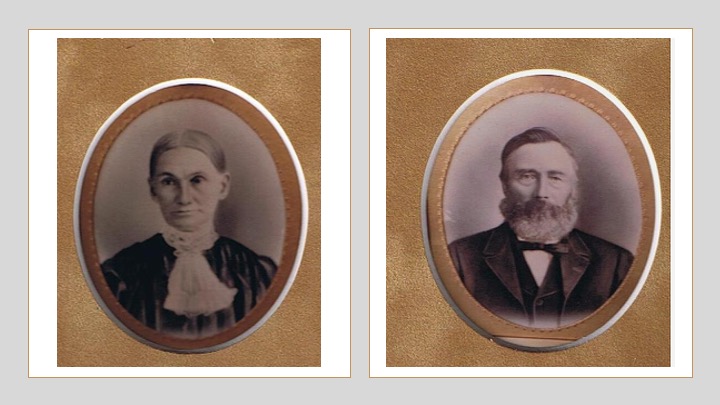
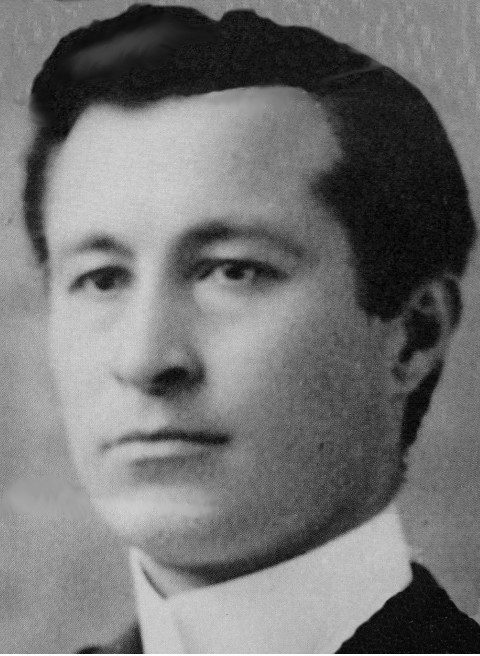
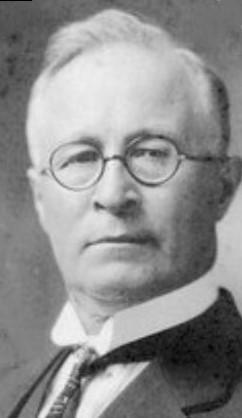
Right: Image from Find a Grave, Alexander MacDonald Jr. (5 Jul 1833–11 Nov 1914). n.d. Find A Grave Database and Images, Memorial ID 150960823, Valleyfield Cemetery, Kings County, Prince Edward Island, Canada; photograph provided by Linda Olsen (contributor 48119027). https://www.findagrave.com/memorial/150960823/alexander-macdonald.
Naming and Renaming
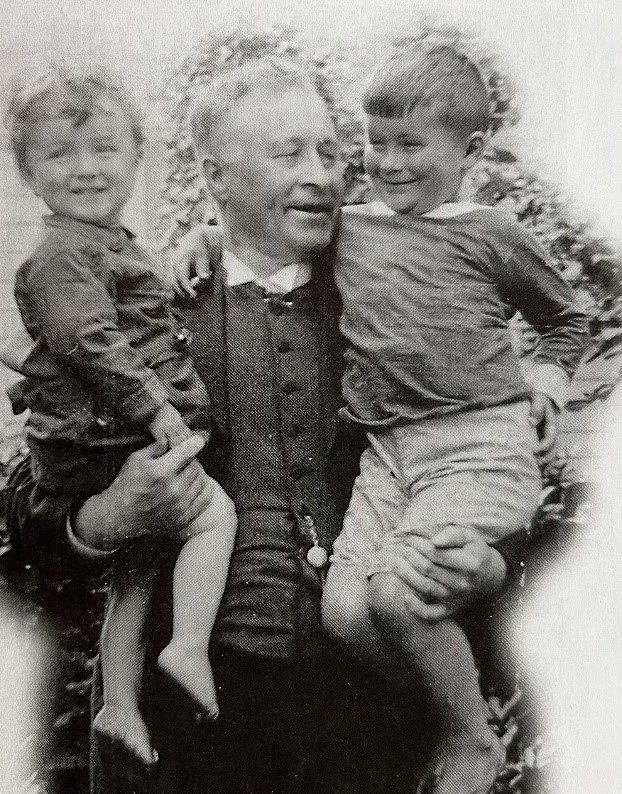
When L.M. Montgomery met her future husband in 1903, his birth name was Ewen McDonald, the son of Christina Cameron and Alexander McDonald, a farmer from Scotland who could read and write. Ewen was named after his maternal grandfather, Ewen Cameron (“Ripe”). By the time Ewen McDonald married Maud Montgomery, he had changed the spelling of his last name. By the time they were settled in their Ontario home, she had changed the spelling of his first name, a name he had had for forty-one years.
McDonald’s name was consistent throughout his years on Prince Edward Island. “Ewen McDonald” is listed twice in the 1891 Prince Edward Island census, once in the home of his parents and in another as a lodger/schoolteacher (Dominion “Alexander”; Dominion “Ewen”; “1891”). On 20 January 1893 the Daily Examiner noted that the village of Grand View, near the McDonald home, had a graded school which was prospering under the “efficient management of Mr. Ewen McDonald and Miss Katie Ross, assistant” (“Grand View”). A notice in the Charlottetown Guardian named Ewen McDonald as a graduate of Pine Hill Divinity School in Halifax, NS, in the spring of 1903 (“All News”).
He was ordained and inducted into the Cavendish, Stanley, and Rustico Presbyterian congregations on 1 September 1903, as Rev. Ewen McDonald (“Minutes”). He joined the Cavendish Literary Society, and on 3 February 1906, Rev. McDonald participated in a Society debate, “Which has been more benefit to humanity—Science or Literature?” Perhaps in an effort to boost himself in Montgomery’s favour, he argued for the side of Literature (Hayden). He was the speaker again a month later on 30 March 1906; Maud was the secretary of the society, and she recorded that “Rev. E. McDonald then read a very able paper …” (E. MacDonald). While she did not record his first name, she did record his last name as he was known at that time.
Rev. McDonald finally proposed to Miss Montgomery in October 1906 and immediately left to study in Glasgow, Scotland (“UK”). McDonald dropped out of university after a few months and returned to PEI in early 1907. At some time after returning to Canada, his last name changed from McDonald to Macdonald. The alteration from McDonald to Macdonald is not uncommon; two of Ewen’s brothers in Prince Edward Island made this change, while his three brothers who lived in the US kept the McDonald version.
While he was studying in Glasgow, Ewen may have been aware of a perception that the “Mc” prefix was a preferred Irish spelling while the “Mac” prefix was Scottish. The former Chief Herald of Ireland wrote, “I may refer here to the widespread belief outside Ireland that Mac is essentially a Scottish prefix. To us this idea is absurd ... Nevertheless, it is a fallacy widely held” (MacLysaght). It is not easy to find exact numbers on surnames, but it does seem that the McDonald spelling did occur more often than MacDonald in Ireland, at least in 1901 (“McDonald Surname”; “MacDonald Surname”).
Montgomery wrote to her Scottish friend, George B. MacMillan, in November 1906, to alert him that her well-liked minister, Mr. McDonald, would be studying in Scotland, and she encouraged them to meet, and they did. George MacMillan spelled his last name “Mac,” although all his relations were named “McMillan.”
(In 2023, I visited his great-grand-nephew in Scotland whose name is still spelled McMillan). Perhaps Rev. McDonald was influenced by MacMillan’s name adjustment to reconsider his own last name. Maud would have welcomed the “Scottish version” of his last name when she married him. Maud fostered Scottish pride in her household, as she felt “her ancestry to be special and … she believed it conferred a special status on her” (Litster, “Context” 39). Both of her sons were fond of the quotation “[t]here are two kinds of people, Scots and those who wish they were Scots” (Rubio, Lucy Maud 497).
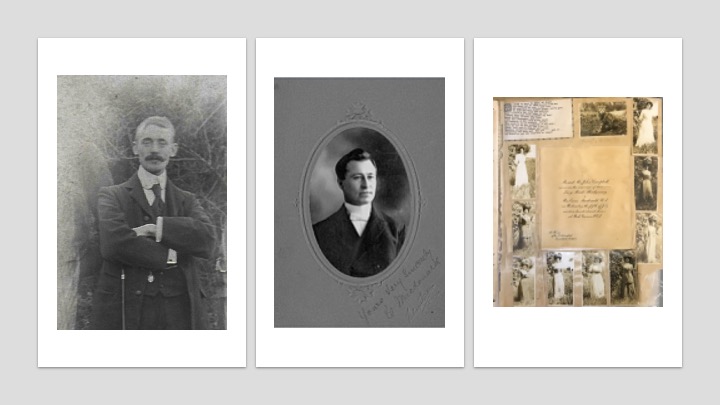
In 1909 McDonald accepted a call to serve congregations in Leaskdale and Zephyr, Ontario. The new assignment would have been a convenient time to register a new spelling of “Macdonald” with the Presbyterian Church when he changed his residence from the Maritimes to Ontario.
The first instance I have seen of his revised signature is an inscription on an undated photograph he gave to Montgomery, possibly in 1909 when he moved to Ontario—“Yours Very Sincerely E. Macdonald.”
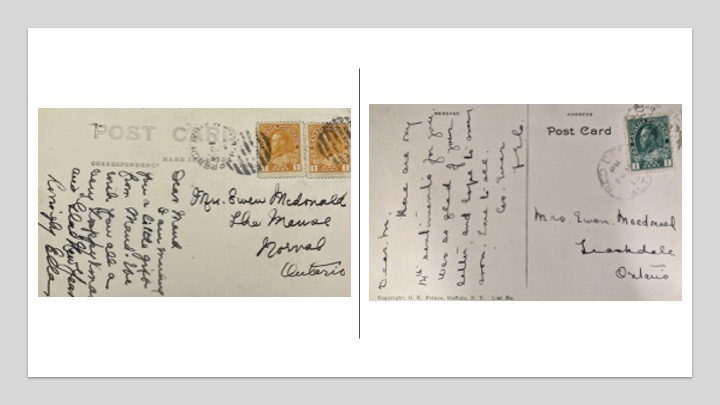
While Montgomery adopted the name Macdonald, it appears she did not warm to the name “Ewen,” which he continued to use after their marriage. Throughout his years in Prince Edward Island his first name was spelled with two “e”s, including his printed wedding announcement in 1911 (Ella Campbell) and newspaper wedding notices (“Marriage Announcement”). On the honeymoon return trip he was listed as “Ewen” (“Passenger”). He had been in Leaskdale for over a year before Maud joined him for their reception in 1911; the notice in the Uxbridge Journal for that event identified him as Rev. Ewen Macdonald (“Reception”). Ella Campbell, wife of Maud’s cousin George Campbell, knew him as Ewen McDonald, and that is how she addressed a postcard to Maud in the 1920s (“Lion”).
Even Frede Campbell, Maud’s closest friend, wrote his name as “Ewen” when she addressed a Valentine postcard to Maud in 1913, while she was in Red Deer, Alberta (“Valentine”). There are few public examples of “Ewan.” We might think it was in common use because it is what we read in Montgomery’s journals and the name she provided in interviews—but there is little evidence that the Reverend ever adopted the new spelling for himself.
When the Macdonalds had children, they favoured family names. Chester Cameron was their oldest child. Ewen’s name on his birth certificate was the “e” version. In her journal entry of 22 September 1912, Montgomery wrote, “Chester was my choice—not ‘after’ anyone but because I have always liked the name and Cameron after the family name of Ewan’s mother. I really would have liked to call him ‘Sidney Cavendish,’ Sidney being my favourite masculine name, but I couldn’t get Ewan to see it that way” (CJ 3:75).
Hugh Alexander, the second son, who died at birth, was named after each of their fathers. On his birth record in 1914 the father was listed as Rev. E. Macdonald. When Ewan Stuart was born in 1915, both father and son were named on the birth certificate with Maud’s preferred spelling. Maud chose the name for Chester, so Ewen insisted it was his turn to name the new baby. Ewen named the boy Stuart after a college friend (again, Maud wanted to name him Sidney). Maud added “Ewan” because she felt the son should have his father’s name. In her journal on 26 October 1915, she confessed that she had never liked the name and also claimed that Ewen did not like it either (CJ 3:207).
There may be no simple answer as to why Montgomery started using a slightly different spelling for her husband’s name or whether he was comfortable with that change. She may have revealed her inclinations in Anne of Green Gables, which is filled with naming and renaming. It is one of the first things we learn about Anne when she sees Barry’s Pond: “Oh, I don’t like that name either. I shall call it … the Lake of Shining Waters …When I hit on a name that suits exactly it gives me a thrill” (AGG Ch. 2, 28). Montgomery was writing Anne during the years of her courtship with Rev. McDonald. As she built her character, Anne Shirley, in 1905, the foundation of identity as Anne-with-an-e was firmly established. This might be a clue for how Maud reacted to the spelling of Ewen when she first met Rev. McDonald in September 1903.
What difference does it make how it’s spelled?” asked Marilla … “Oh, it makes such a difference. It looks so much nicer. When you hear a name pronounced can’t you always see it in your mind, just as if it was printed out? I can; and A-n-n looks dreadful, but A-n-n-e looks so much more distinguished” (AGG Ch. 3, 35–36).
Was this a reference to Reverend McDonald’s name, Ewen-with-an-e; did Montgomery tell the minister that Ewan-with-an-a looked nicer and was much more distinguished? It is not hard to imagine that when Maud first heard his name, she could see it in her mind and became imprinted with her own image of how his name should look. This additional passage from Anne of Green Gables seems to be evidence (if we attribute it to Montgomery) as to why she changed his name: “When I don’t like the name of a place or a person I always imagine a new one and always think of them so” (AGG Ch. 2, 26).
While Maud’s reasoning for the change might have been like Anne Shirley’s, a strong aesthetic preference, there are no other references to shed light on it or refer to it except for her claim that Ewen did not like his name. If that was true, it does not appear that he liked “Ewan” better than “Ewen” either. While it could have been awkward to have his wife spell his name in a slightly different way than he did, Ewen seems to have avoided any embarrassment by signing his name “E. Macdonald” when necessary. He might have felt it was more professional and more formal; after all, his wife used the initials “L.M.” in her professional life. He may truly have disliked the name “Ewen” enough to never sign it, or he may have adopted a “You do you,” attitude toward Maud, conceding that she should use whatever name suited her. It may even have been a little joke between them, but when she named their son Ewan Stuart, the name found a permanent place with at least one person in the family.
Ewen had his own name preferences, too, but they were weighted with more underlying tensions—Mrs. Ewen Macdonald was her “title,” and L.M. Montgomery was not acceptable. When Ewen and Maud met, his aspirations may not have reached higher than to be a good country parson with a wife who was an interesting and agreeable companion and who would, in her role as a minister’s wife, teach Sunday School and play the church organ. And that was the expectation he held onto and appreciated, “Today [Valentine’s Day. 14 February 1921] Ewan came to me in the library, put his arm about me, and told me I had brought a great deal of joy into his life and that I was ‘the dearest little wife in the world’ … I am glad I have made him happy” (CJ 4:307). However, he was not prepared to live alongside a woman who dined with the Governor General of Canada, corresponded with the Prime Minister of the United Kingdom, or was honoured by the King of the United Kingdom and British Dominions. He was not inclined to acknowledge her celebrity nor make many concessions to it, other than accepting the comfort from the income that came with it. Maud’s spotlight was large and bright, and Ewen stood outside of it. There were plenty of others to bolster Maud’s pride and acknowledge her accomplishments, and it would not be surprising if her husband felt diminished in comparison (Rubio, Lucy Maud 181, 195).
This discomfort was apparent in 1911, from the beginning of their marriage, when her fan mail arrived in Leaskdale addressed to “L.M. Montgomery.” He was very offended by the use of her former name and unjustly rebuked her for it. She was angry and deeply hurt; it was obvious that her readers only knew her by the name printed on her books. Ten years later the subject came up again and Ewen apologized, admitting he had been “wrong and foolish” (CJ 5:27, 20 Apr. 1922). It was a long time to wait for an apology, and she still was hurt by it.
Other possible clues to this issue are present in public records, such as the (admittedly hard to decipher) census records in Leaskdale and Norval, where corrections were made in the column for “occupation.” It would be helpful if we knew who provided the information to the census-taker; it could have been either Maud or Ewen or the maid Lily Myers in 1921, or the maid Faye Thompson in 1931, but that information is not available. In the 1 June 1921 census, the recorded household names are “Ewen,” “Lucy,” “Chester,” and “Stewart (sic).” The occupation for “Lucy” is written as “none” over a strikethrough on a word that could be “author.” Information provided in the 1 June 1931 census was slightly different: household names are “Ewan,” “Lucy Maud,” “Chester C.,” and “E. Stuart”; an occupation for Lucy Maud is crossed out, possibly “novelist,” but this time the word over it looks like “writer” (Dominion “Ewen,” “1921”; Dominion “Ewan,” “1931”). The difference in records suggests (to me) that the same person did not provide the information for both.
The public records of death certificates invite more interest. When Ewen died on 13 December 1943, Chester provided the details and registered his father’s name as “Rev. Ewen Macdonald” (“Ontario Death,” 1943) The obituary published by the General Assembly of the Presbyterian Church named him the same way (The Acts). The name “Ewan Macdonald” is on the document which certified Maud’s death. She died on 24 April 1942, and Ewen, probably with the help of Stuart, provided the details for her death certificate, including a number of errors. “Hunters River” is written instead of Hunter River, Maud’s father’s name is first written as Ewan, crossed out, and then changed to Hugh John, Hugh’s birthplace is written as England instead of PEI, Maud’s mother’s birthplace is written as Ontario instead of PEI, and the name of the person providing information is signed as “Ewan Macdonal,” omitting the last letter (“Ontario Death,” 1942) Do the errors reflect Ewen’s confusion or the lack of background knowledge by his family? On the certificate, Lucy Maud Montgomery’s profession is written as “housewife.” This description can be incomprehensible for Montgomery’s fans, but it is how Rev. Macdonald wished to state her relationship to him and not her relationship to the world. The description on her death record hides Montgomery’s stature as a famous author and also understates her life as a remarkable minister’s wife.
In spite of Ewen’s desire to separate her professional life from his domain, her domestic role found its way into the architecture of her novels. Brenton Dickieson spoke about this aspect of her life in his August 2024 presentation “The L.M. Montgomery Canada Forgot,” given in the Cavendish United Church, honouring the 150th anniversary of L.M. Montgomery’s birth. “Why do stories of ladies’ meetings and missionary societies and Sunday School picnics and moral lessons and hymn sings fill Montgomery’s stories? Because they filled her everyday life” (Dickieson 6–9).
Everyday Life
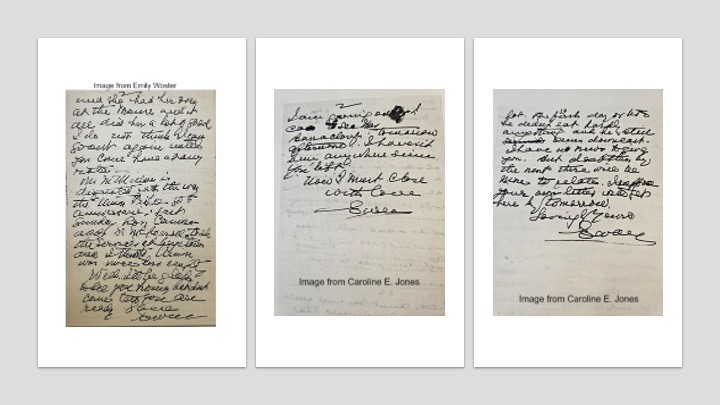
The public records of both the “Ewen” and “Ewan” names document the events and landmarks in the minister’s life, but there are few records of his private life, except for the curated accounts in Montgomery’s journals and letters. However, there are a few papers that can be examined on their own in the form of original portions of short private letters that Ewen wrote to his wife in the later 1930s. Dr. Elizabeth Epperly found these letters on the reverse side of Montgomery’s Jane of Lantern Hill manuscript held at the Confederation Centre Art Gallery in Charlottetown, PEI.
Perhaps the most interesting pages she preserved are by Ewan. They give us a glimpse of a shrewd and able man who, when well, looked closely at what was around him. Nine pages of the manuscript mix together parts of Ewan’s sermon—on love—and sharp assessments of his Norval congregation leaders” (Epperly 81).
Maud was visiting friends and family in Prince Edward Island in 1936, and she exchanged letters with her husband in Toronto. His letters are short notes about local interests, family and friends, and hopes or expectations of letters from her. The first undated and partial letter (pages two and three) was written after she arrived on PEI on 2 October 1936; his signature looks like “Ewan” in it.
I paid a visit Saturday evening at McGillivray’s new house. It is certainly large and fine enough … he seems to be quite proud of it. But after all it was foolish to sacrifice [$]9000.00 on selling the old and pay and [sic] extra [$]6000.00 on the new—The old one cost 25000 Sold at 16000 The new one cost 22000 so [$]15000 was lost between the two—a good bit of money—
We are all getting along nicely not withstanding your absences. The Cat Lucky by name has missed you a lot. The first day or two he didn’t eat hardly anything and he still seems downcast.
I have no news to give you. But doubtless by the next there will be more to relate. I suppose your own letters will get here by tomorrow.Lovingly Yours
Ew[a]n (Montgomery, Jane 438)
Malcolm McGillivray was their former neighbour in Toronto, having lived at 212 Riverside Drive. (SJ 5: 394). This letter prompted worry about her beloved pet cat, Lucky, throughout her PEI visit. Lucky died about three months later, 18 January 1937.
Ewen wrote a very short two-page note to her again on October 17. His signature looks like “Ewen” in this letter. He mentions Ida and Ernest Barraclough (1874–1936), friends from their residence in Norval. Ernest had died a month earlier on 10 September. Ewen appears to miss her and appreciates her need to see her “old friends.”
Dear Maud.
Your two letters have got here and contents intact. I am glad you are going to arrive two weeks today. Mrs. Lane told me yesterday she received a card from you and was glad of it. You will be sorry to hear that Mrs. LePage has passed away. Funeral this afternoon. It has made quite a difference on the street … Glad to hear that Christie [his sister] is well and all your old friends. The boys are carrying on faithfully as ever and I think both of them have entered into the heart of their work. I am going out if I can to see Mrs. Barraclough tomorrow. I haven’t been anywhere since you left. Now I must close
With love Ewen (Montgomery, Jane 313)
His last letter is on October 20, and has the clearest signature. Maud instructed him not to write again (because she would be home by November 7). He was able to visit Mrs. Barraclough and went on to be critical of people attending Union church services. He ended the letter by encouraging her to stay on the Island longer if she wished:
This will be according to instructions, my last letter to you. I am enclosing Mrs. [Jones’s] letter. Naturally I wanted to hear how they felt, and I am glad your letter comforted them—I was out to see Mrs. Barraclough last Sunday, I stayed there for 3 hours as long as Chester could wait. [Mrs. McMillan] has been quite a help to her. She stayed with her some nights while Eva was away for a few days and she had her over at the Manse and it all did her a lot of good. I do not think I can go out again until you come home at any rate … Well. I’ll be glad to see you home, but don’t come till you are ready.
Love Ewen (Montgomery, Jane 306)
Love
Ewen’s notes are signed with love in his own name; he looks forward to her return, writes positive reports about the boys, and shows an understanding of how much her trips to PEI mean to her. They shared good foundations, especially their roots on Prince Edward Island, their church, and their participation in community life. Maud Montgomery had been attracted to the man called Ewen, whom she always remembered as having a “cheerful smiling face with its dimples and roguish eyes” (CJ 5:107; 6 Jan. 1923). In a 1903 humorous diary she co-wrote with Nora Lefurgey Campbell, she included her first impression of Ewen: “We had a Highlander to preach for us and he was ‘chust lofely’ [just lovely] … My heart pitty-patted so that I could hardly play the hymns” (Litster, “Secret Diary”). However, any pages in her personal diaries that might have included positive feelings about him were excised—“…in the entry when she first described [Ewen], she removed the page and inserted a replacement” (Rubio, Introduction xxiv).
During her courtship, she had a frank and unedited discussion of love in her correspondence, and flirtation, with George MacMillan, a long-time friend in Scotland. After MacMillan met Rev. McDonald in Glasgow in late 1906, he seemed to know that Ewen had proposed to Maud because he began to write letters asking her to clarify her requirements for a husband (Cavert, “Montgomery’s Letters”). Maud explained that, in her experience, a successful friendship worked between people who were alike, but she thought that the happiest marriages she knew were between people who were not alike at all. She finally revealed that she would settle (or had settled) for a practical marriage.
If two people have a mutual affection for each other, don’t bore each other, and are reasonably well mated in point of age and social position, I think their prospects of happiness together would be excellent ... If I ever marry that is the basis on which I shall found my marriage. But—I shall never cease to thank fate that I knew the other kind of love too. (Montgomery, My Dear 32)
The “other kind” was a reference to her passion for the seductive Herman Leard in 1898 (Gammel, “Herman”).
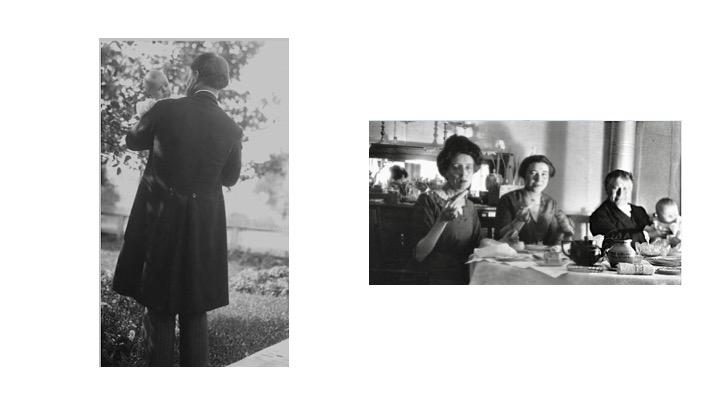
She was content to have a happy practical marriage, and she did. The years from 1911 to 1918 were the golden years of Ewen and Maud’s lives, especially the first few, despite the loss of a stillborn baby and the horrors of the Great War. Maud and Ewen were admired and appreciated in their community and congregations; Ewen was healthy, busy, and happy; and they both adored their two little sons. Their beloved long-time friend and cousin, Frede Campbell, was part of their family, visiting frequently.
All of that changed in February 1919 when Frede died in the Great Influenza pandemic. Montgomery’s life shifted in an irreversible way at Frede’s death; she felt forever wounded and emotionally rooted in the time before war. Afterwards, her sense of aloneness never ended. Lucy Maud Montgomery lived with a sharp grief for many years before she could yield to mourning.
Frede’s death was a mutual loss that shattered the Macdonald home and destabilized both inhabitants. Ewen watched Maud fold under in grief. He suffered a double loss—he lost his friend, who had buoyed his family, and he lost a wife whose capacity for resiliency and joy could only be fully replenished by Frede. The unique characteristic of Frede was that she was the only person who was deeply invested in the author’s well-being and family; she cared about Ewen too. She monitored Maud’s health, supported her work, made her laugh, was a sounding board for all of Maud’s worries, and was devoted to Maud and Ewen’s first son. No one else fulfilled that intimate role for Maud, or Ewen, who had few close friends. Maud was consumed with memories of Frede throughout March and April 1919; her pain worsened after a disastrous visit with Frede’s husband in late April. Her agony was doubled when she essentially lost her husband in the next month; his mental health defences broke down on 23 May, three months after Frede’s death. In the trauma of the months following Ewen’s breakdown, Maud was overwhelmed and in September claimed that she never would have married him if she had known about his episodes of depression (CJ 4:189) even though she had many periods of depression herself. Ewen became more vulnerable to his own fears; feeling forsaken and abandoned by God, his anxieties deepened—the devastating effects lasted intermittently as long as he lived. As Maud wrote on 14 January 1939, “the Ewan I had married went away—never to return save for a few weeks or days now and then” (SJ 5:301).
It should go without saying that the debilitating stresses on family relationships that would fall on this household were not connected to how anyone spelled their name. While it is possible that Maud’s incorrect use of her husband’s name could have created occasional territorial or identity discussions between them, there were far more real, consequential upheavals that seriously and tragically affected the quality of their lives together. Ewen often bears the responsibility for an unhappy marriage because of the manner in which his illness was documented in Montgomery’s journals and letters, a portrayal which contemporary writers of articles and blogs often simplify and repeat, unaware of other accounts and circumstances. Montgomery’s “unhappy” marriage and any regret she expressed were not because of the kind of person that Ewen was but because of his illness. Maud and Ewen were compatible in spite of their different interests. Ewen was smart and practical, though prone to teasing. He was wise enough to give her Bliss Carman’s Making of Personality as a Christmas gift in 1908; she called it a very beautiful and helpful book that made her feel brave, hopeful, and encouraged (CJ 2:214, 20 Feb. 1909). Rubio describes the couple as complementary because where she was “high strung,” he could calm her, and she could lift him up him when he lagged. He did not match her sensitivities to literature and nature, but he had a characteristic she valued highly, kindness (Rubio, Lucy Maud 210).
“Poor Maud’s Marriage”
Throughout his adult life Ewen had periods of extreme vulnerability; he suffered from severe headaches, insomnia, and episodes of despondency, especially when he was away from home during his years at Prince of Wales College and Dalhousie, but in Glasgow these sensations became more severe (CJ 4:149; 1 Sept. 1919). His troubles seemed to be in his past at the time of his marriage. He had no more serious attacks until the spring of 1919, after the end of the First World War, when the incidents resumed and escalated. He was consumed by the dread that he was doomed to eternal unrest; he became tragically susceptible to the Doctrine of Predestination, which he and Maud would have learned as children, although Maud rejected it (CJ 2:262; 7 Jan. 1910). Even so, doctrines of election and predestination were no longer taught when he took theology training; yet, this doctrine fuelled his mental illness for the rest of his life.
His mental health decline became a formidable burden, and Maud found herself in a role she did not expect, that of a full-time adult caregiver. Montgomery used her diary as a “grumble” book to vent her emotions and, in some years, she recorded details of Ewen’s state of mind almost every day. Ewen had no grumble book, so his wife filled that role for him, an unbearable burden for her over time. Maud tried to treat his headaches and insomnia and resisted leaving him in an institution because she felt that she could care for him better than anyone else. She was baffled and anguished when faced with his hopeless conviction that he was eternally damned. “Many of his deeper dreads and fears he will not admit to anyone but me …” (Epperly 80). They kept many of his symptoms hidden from the numerous doctors they consulted over the years.
Ewen’s attacks of hopelessness and physical discomfort might seem to be random, but he certainly was not immune to the great stresses on both of them in the decades after 1919. The difficulties they faced were often compounded with even more difficulties. Both of them were plagued with drawn-out lawsuits, church politics, and congregational crises; everything that upset Maud affected him too. She stated, “there is no denying that illness makes all our worries harder to bear” (SJ 5:193; 31 July 1937), but if Ewen was well, she thought she could endure most things even if she was ill.
During the Norval years (from 1926 until 1934), Ewen was relatively healthy, a welcome respite (Rubio, Lucy Maud 429). On 23 June 1939, Montgomery recalled how they felt when they first saw the beautiful view of Norval and the Credit River on a pastel-tinted March evening—they “were both so happy that night” (SJ 5:343). With new congregations, Ewen was in good form. He took the initiative to collect research material and wrote a history of one of his churches; he “radiated happiness” over the project (Rubio, Lucy Maud 627n42). He wrote his own sermons and spoke from memory in the pulpit; his early tenure there was positive, hopeful, and stable.
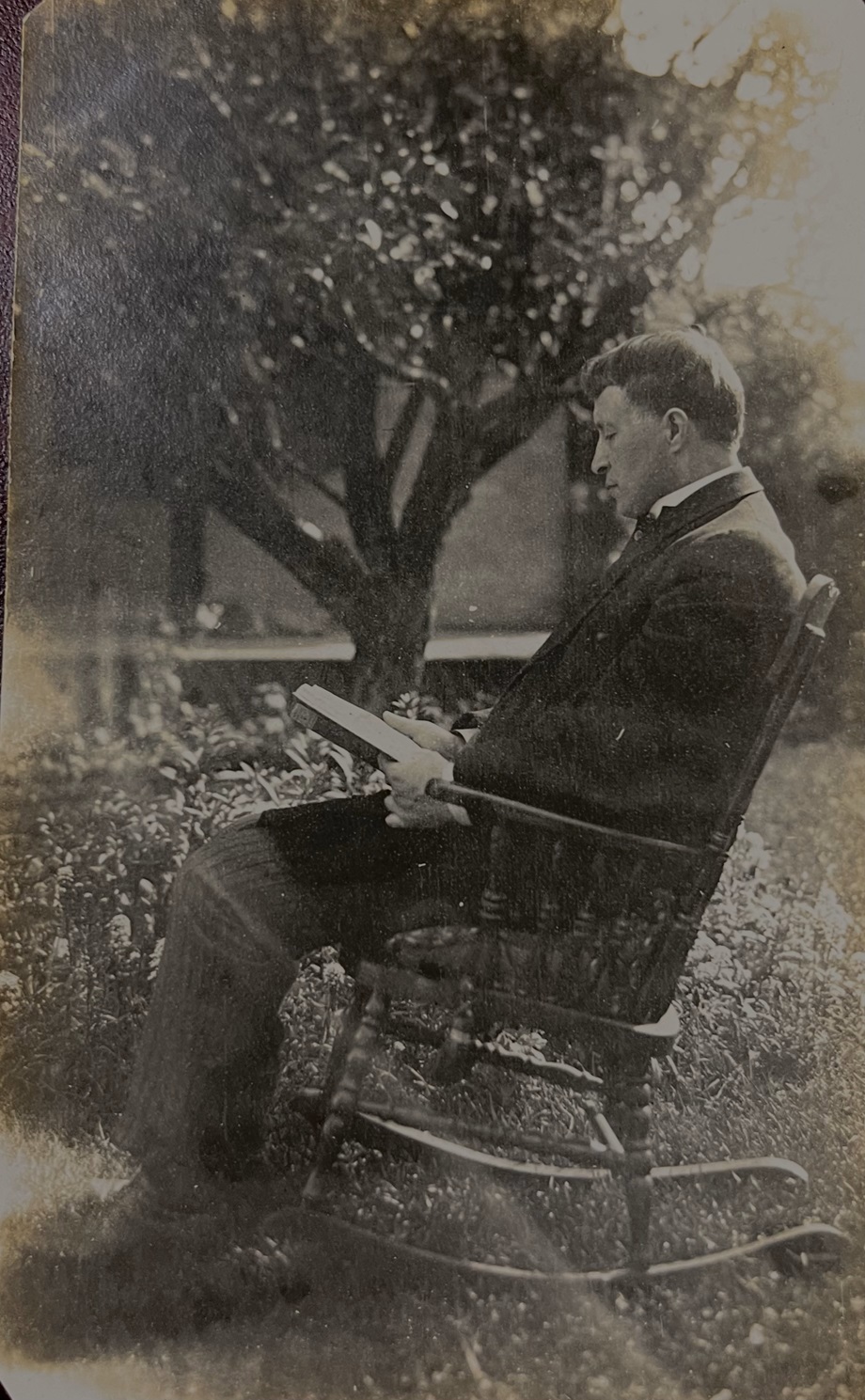
In the first happy years of their marriage, they both went to bed late and read for hours (Montgomery, Letter to MacMillan). Ewen could not read in periods of illness, and neither of them could sleep through the night, if at all, but between bouts of depression, Ewen could read novels, enjoy lawn bowling, and compete at cards. He was almost always calm and focused when driving their car (although not always a skilled driver). Maud accurately noted that it was good for him because “the sense of power driving the car and feeling that he is its master … removes temporarily that subconscious sense of inadequacy that torments him” (SJ 5:258; 5 June 1938). He was generally introspective and usually reserved and formal around the housekeepers whom Maud employed, and avoided all household and garden tasks. He was at ease and managed well enough in the company of people he knew well and liked; a long-time friend who had lived with them saw them both as somewhat strange, but they “were clearly very fond of each other” (Rubio, Lucy Maud 586).
Ewen was not tidy and did not possess the manners and social graces that his wife and son, Stuart, had—when the family entertained acquaintances at meals, he was awkward and tried too hard to tell stories, a skill that came easily to his wife. His efforts sometimes embarrassed his family, but on one occasion, his behaviour went beyond embarrassment.
While I was preparing for my first presentation at the L.M. Montgomery Institute conference in 1996, I contacted (Ed) Ernest Campbell, Jr. (1918–2000). He was the son of Nora Lefurgey Campbell. Nora was the subject of my paper, a close friend of Maud’s from PEI, and her confidante in the 1930s. I received a letter from Ed on 11 October 1995 responding to my questions about his mother. In that letter he wrote about his first impression of Montgomery in 1928—she was formidable, with a “strong voice which expressed her feeling of self-importance and superiority” (Cavert, “Nora” 112).
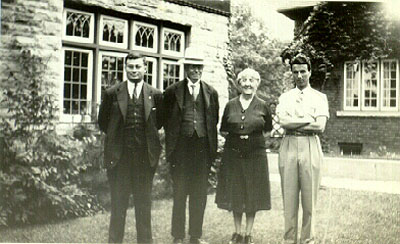
Ed included an experience he had at the Macdonalds’ home when he and his mother had dinner there in the summer of 1932. At the time, Mr. Macdonald “terrified” him; he felt he was “peculiar,” and looked “unbalanced.” “He confirmed [this impression] one night at the dinner table when he threatened my mother with a shot gun which I didn’t know was un-loaded” (E.E. Campbell, to Cavert, 11 Oct. 1995). I followed up that startling news with a phone call to him on the day I received his letter. In that conversation, Ed told me he remembered many visits to Norval with his mother and more memories about the rifle incident. At the meal, his mother and Ewen were seated at one end of the table, and he at the other. Ewen left the table and returned with a rifle, which he pointed at Nora. Edmund, a young teenager (about fourteen years old), was horrified, and everyone froze in place. All that went through his head was that he ought to do something to save his mother! Whether Ewen said anything or someone else did, everyone relaxed when Ewen lifted the gun; the incident must have been declared a joke, although Ed was too upset to hear what was said. Nora did not mention anything about it to Ed afterwards, only saying that they ought to have sympathy for “poor Maud’s marriage” (E.E. Campbell, personal communication, 14 Oct. 1995).
It is hard to imagine what dinner conversation might have prompted Ewen to display a rifle in that way, even if he was trying to be clever. Nora was a long-time acquaintance whom he met in Cavendish in 1903. Maud and Nora engaged in a very pointed way of teasing, or “ragging,” bordering on cruel, a practice that might have struck him the wrong way. More significantly, Nora was the only person in whom Maud confided her concerns about Ewen’s maladies and fears for Chester; if he was aware of it, this may also have been a concern for Ewen. Nonetheless, Nora and her husband Ned (Edmund Ernest Campbell) spent many evenings with Maud and Ewen, especially in 1935 during their last years in Norval and their move to Toronto, until Ned’s death on 1 February 1937.
After Nora’s stay the week before, Maud wrote on 2 July 1932, “I have had a good week—heaven with a little spice of hell in it—a dash of cayenne. And I have felt better in every way. All I need, I really believe, is a bit of cheerful companionship” (CJ 7:253). If Maud’s “dash of cayenne” was Ewen’s bizarre behaviour, it was not enough to affect her good week—the “spice of hell” was obscured by the heaven of companionship.
The entries in Montgomery’s journals after 1933 are a litany of misery and have become fodder for placing the blame of Montgomery’s unhappiness on the shoulders of her husband, whose illnesses were exacerbated by unsound medical interventions at the hands of doctors, Maud, and Ewen himself. In spite of what he described as terrible headache-pain symptoms, among other real or imagined ailments, every doctor told him there was nothing wrong with him. These opinions influenced Maud’s perception that the cause of his illness, particularly his headaches, was “psychic,” and therefore his symptoms could not be physically painful. If his ailments were described today as psychological with a heaping dose of migraines and a side of incurable chronic bronchitis and emphysema (also known as COPD), readers of Maud’s journals might have a clearer understanding of the challenges Ewen faced in wandering from doctor to doctor to find relief.
After his first breakdown in 1919, Maud was comforted slightly when a doctor told her that Ewen suffered from simple melancholia and not what she had feared, “manic depressive insanity” (CJ 4:164; 1 July 1919). Both Maud and Ewen were, in many instances, pessimists; Maud felt she was under a curse from the Fates for her bad fortune and loss, while Ewen felt responsible for their bad fortunes because of his inadequacy and guilt as a minister who was estranged from God. Ewen’s breakdowns were terrible and debilitating, but her narratives about them were cover stories for a far more insidious wounding that began to unfold long after Ewen’s first breakdown (Rubio, Lucy Maud 571). There were cascading and traumatic circumstances that underlie the incomplete image of the man Maud Montgomery in happier times selected for a partner. The final unravelling of their family and Maud’s mental state stemmed not from Ewen, but from the catastrophically destructive behaviour of their oldest son, Chester (b. 1912).
Life’s Fitful Fever
As early as 7 Oct. 1921 Maud recognized in Chester a “curious little streak of contrariness that there is in Ewan” (CJ 4:339), and in 1924 they both were concerned about Chester’s early development. Shortly after his sixteenth birthday, their worries began: “Ewan and I had some trouble with Chester—something nasty and worrying that embittered life for many days and filled us with deep-seated fear of his future” (CJ 6:215; 22 July 1928). Maud had taken on almost all of the responsibilities in training Chester (Rubio, Lucy Maud 310; CJ 5:196; 11 Jan. 1924; CJ 7:350, Dec. 1933), and she hoped for the best when they sent him off to high school, but the future they feared arrived in the 1930s. The only benign thing he did was to change his name to “Cameron Macdonald” and sign papers as C.C. Macdonald, perhaps to claim a new identity or independence marking his transition from child to adult; Montgomery always called him Chester in her journals (Signature, “Ontario Death” 1943).
After a series of disappointments and academic setbacks, a publicly humiliating blow came when Chester was “forced” into a marriage in December 1933. It triggered a deep response in Ewen and changed him irreparably (Rubio, Lucy Maud 429–30). Their son’s deceit, school and job failures, and unexpected marriage and his wife’s early pregnancy were just the beginning. Although Chester’s parents acknowledged his failings, he suffered very few consequences for the worst of them; as loving parents, they tried to fix the problems he brought on himself. Ewen met with his son’s professors at least twice to try to get him readmitted to university after he failed his classes. They achieved some short-term success in advancing a career for Chester, but their protection and indulgence of him, including Maud’s defensive rationalizations, prevented any meaningful interventions. More significant was that his antisocial personality and corruption proved to be quite beyond corrective measures any concerned parents might take. Stuart became estranged from his brother as early as the late 1920s, even choosing to sleep in a tent so he would not have to share a room with him (Rubio, Lucy Maud 373). By 1937 Stuart was in Toronto studying to be a doctor and avoided Chester most of the time when he was home because Chester initiated arguments with him and their father (Rubio, Lucy Maud 503).
Neither parent knew how to cope with the son who was the opposite of everything they valued and represented. He lied and stole, was irresponsible and promiscuous, effectively abandoned his impoverished wife and children, and continually pressured his mother for both financial and unearned emotional support. When the possibility of his divorce became a reality, Maud tried and failed to cut ties with him. She felt that the only grounds for it were adultery, insanity, and desertion, and, unfortunately, Chester qualified on at least two of them (CJ 5:183, 18 Oct. 1923). The parents suffered humiliations from the knowledge that Chester’s true character was known among their neighbours, friends, and parishioners. By 7 June 1938, Maud had read Stuart’s psychiatry books and agreed with him that Chester had a “psychopathic personality” (SJ 5:258). She felt helpless over the future of his children and could only record in her journal that there were terrible things about Chester, but she could not write about them.
Montgomery found herself alone to face the challenges to the stability of their family. She felt that “Ewan has always been unable to face any unpleasant reality, or what he thinks is a reality” (CJ 5:230; 25 Mar. 1924), but Montgomery, too, was inclined to avoid confrontations. The reality that Maud and Ewen had to face was more than unpleasant, it was unbearable—their son was incorrigible. Ewen was affable and socially engaged when Chester was absent, but his episodes increased when Chester was in the home. Maud was left to try to navigate through both her husband’s and son’s numerous crises while trying to salvage the family’s reputation, not to mention earn an income. On 12 March 1919 Maud wrote that her only goal as a parent had always been the happiness of her sons: “if I can only live long enough to see my boys educated, well-started in life and—if the fates are kind—happy in homes of their own” (CJ 4:129). In the 1930s, that goal was thwarted continuously, in spite of her relentless efforts to achieve it. In June 1938, she envied some friends whose son was killed in an accident because they could grieve openly and receive sympathy, while she had to hide her grief over a son she had lost “more cruelly than by death” (SJ 5:260).
Ewen and Maud lived in a feedback loop of ongoing helplessness and illness. There were other enormous concerns for Maud during these years, such as financial worries, reduced literary status, world war, and physical injuries, but the overriding devastation was caused by her son (Rubio, Lucy Maud 566–67, 572). The year before she ended her written journals in 1939, she gave Chester a letter telling him that he had “wrecked both Ewan’s and her life” (Rubio, Lucy Maud 528). It was not until October 1941 that Maud openly admitted to her closest relatives that her long-time mental distress was because of Chester and that “he has broken our hearts this past 10 years … My heart is broken and it is that has broken me” (Rubio, Lucy Maud 570). In December 1941 she finally confessed to her friend George MacMillan, “My oldest son has made a mess of his life, and his wife has left him” (My Dear 204). Maud had tried her best, but her hopes that their son would ever find a way to “dignify his life” were in vain (Rubio, Lucy Maud 555). Ewen and Maud had run out of bends in the road until it stretched out to unending despair. The continuing assault of mortifications finally drained their last hopes and resilience.
After Life’s Fitful Fever
One of Montgomery’s favourite quotations about life’s struggles was from Shakespeare’s Macbeth: “After life’s fitful fever, he sleeps well.” She used it as a description for the life of her beloved aunt Mary Montgomery McIntyre (GGL 85) and included it in her 1901 column in the Halifax Daily Echo, “Half Hour in an Old Cemetery” (“Half-Hour" 73). She felt the impact and meaning of these words most deeply when she sat beside Frede Campbell holding her hand as she died; she wrote about that moment, “After life’s fitful fever, she sleeps well” (CJ 4:103, 7 Feb. 1919). On 7 December 1919 she noted that Frede’s husband agreed to include the epitaph on Frede’s gravestone, and she added that she wished to have the same epitaph on her own (CJ 4:212). A year later she saw Frede’s grave for the first time: “There it was and on her stone the line, After life’s fitful fever she sleeps well. When I die I want the same quotation on mine. Yes, she sleeps well. The ‘fitful fever’ is over for her—not yet for me!” (CJ 4:284; 2 Dec. 1920).
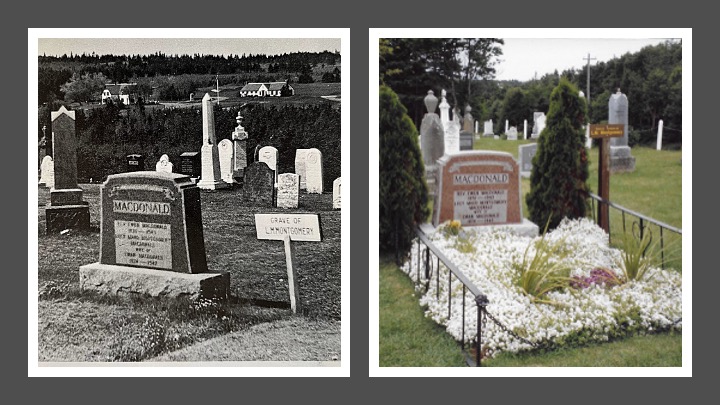
It does not seem that she left any instructions to include this quotation for herself. She may not have made the epitaph known to her family so many years later; but, if she did, they (or she) might have decided it was not a message they wanted to display. While Maud did not leave instructions about what should be inscribed at her burial place, she did make it clear on 21 July 1923 where she and Ewen would be buried.
… I belong here—this old Island gave me birth—it must give me a tomb. Here only can I rest at last—here it is fitting that I should be buried. And it is fitting that Ewan should rest here, too. Cavendish was his first charge and it was he who converted the graveyard from the old jungle it once was into the orderly, well-cared for place it is today. One could say of him, as it is said of Wren, “If you seek his monument look around.” (CJ 5:160)
The Macdonald grave was placed in the Cavendish Cemetery as she wished, not far from the graves of her mother and Macneill grandparents. At the time of her death, there was a sightline towards Lover’s Lane and the “Green Gables” farm, and a view over the pond and dunes toward the Gulf of St. Lawrence. Her stone is engraved “Lucy Maud Montgomery Macdonald” but an additional sign with her pen name, “grave of L.M. Montgomery,” was added in the 1940s to identify the site for visitors remembering the author.
The engravings for Ewen Macdonald acknowledge his two identities, showing that in Prince Edward Island, in public and among family and long-time friends, and in the church, he was known as Rev. Ewen Macdonald—though within his home, as a father, a namesake, and husband, he was Ewan. The gravestone chosen for Maud and Ewen in the Cavendish Cemetery spells it out in both ways.
MACDONALD
REV. EWEN MACDONALD
1870 – 1943
LUCY MAUD MONTGOMERY
MACDONALD
WIFE OF
EWAN MACDONALD
1874 – 1942
Epilogue
In spite of Ewen Macdonald’s serious illnesses, the abuse of fruitless and hazardous medication, and the burden all of it placed on Lucy Maud Montgomery, Ewen remained a worthy and sympathetic person in the eyes of his family. This made his crippling illness seem all the more unfair to Maud: “Poor fellow, he is good and kind and never did wilful harm or wrong to anyone in his life” (CJ 4:321; 18 May 1921). Stuart never considered his father to be deranged and always emphasized that he was the “kindest man who ever lived” (Rubio, Lucy Maud 585, 210). Ewen had some good moments that Montgomery did not record at the time they happened but mentioned years later, such as remembering that Ewen played with his grandson as he had also played with his own young sons: “Ewan is greatly taken up with Cameron. Says he is ‘a dear’ and romps with him as he used to do with his own in Leaskdale manse” (SJ 5:298, 25 December 1938).
Even in her despairing entries she also allows readers to see Ewen in the way she hoped to see him again. When he was not consumed with illness, she reminds readers that “[n]ormally, he is a fine looking man …” (SJ 4:295; 4 Sept. 1934). She was attracted to his dimples and smile and cheerfulness. He could be fun with friends, laughing and joking; he was the “jolliest man alive” (Rubio, Lucy Maud 436). Laughter was a tonic for Maud and Ewen both, but it was sadly lacking in much of their later lives.
While we rarely hear Ewen’s voice in Montgomery’s journals, this statement at age sixty-seven shows a person who fulfilled her 1907 requirement for a contented, even happy, marriage. If we could set aside all the extraordinary damage of mental illness and pathology inflicted on the family, we might find two people with a “mutual affection for each other.” On 4 August 1937, she wrote, “Ewan is well all day. There is something about him now that has been absent ever since the spring of 1919. He admits it himself. A certain ‘contrariness’ has gone and he is thoughtful and affectionate. He said to me today ‘I see you as I saw you on our wedding day’” (SJ 5:194).
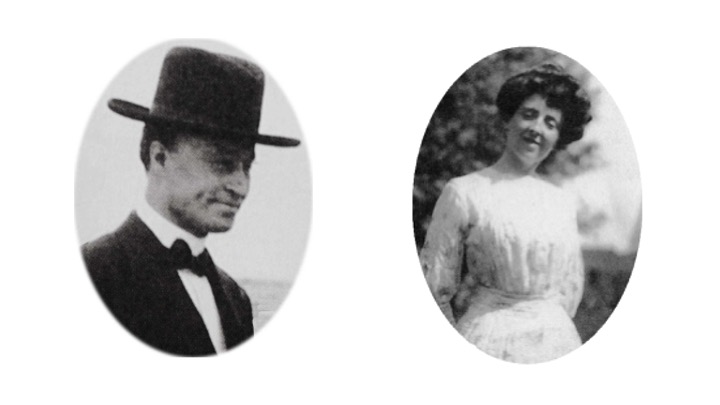
While there is no way to mitigate the damage Chester caused his parents and family, it is worth noting that the present generations of the descendants and heirs of Maud and Ewen Macdonald stand in contrast to Chester’s sad and ruinous life. The Macdonald-related families of today have honoured and maintained the legacy of Maud Montgomery’s creative life as goodwill ambassadors and are essential members of L.M. Montgomery communities, contributing to all of them with enthusiasm, intelligence, generosity, humour, and friendship.
Acknowledgements
All good things come from Kate Scarth, Laura Robinson, Caroline E. Jones, Holly Pike, Jane Ledwell, Lesley Clement, Jean Mitchell, Eve Murphy, and the staff and contributors of the Journal of L.M. Montgomery Studies.
Elizabeth Epperly and Emily Woster, Caroline E. Jones and Brenton Dickieson, Vappu Kannas, Jennifer Litster, and Kathleen MacKinnon provided information, images, citations, and texts of Ewen’s letters in the collection of Confederation Centre Art Gallery, Charlottetown, PEI.
George Campbell, Melanie Whitfield, and Yuka Kajihara provided examples and photographs of Ewen’s signatures from Prince Edward Island and Ontario. Bernadeta Milewski provided an image of Frederica Campbell’s handwriting. Melanie Whitfield and Kim Arnold, Archivist, provided a photocopy of Ewen’s obituary from the Acts and Proceedings of the Presbyterian Church.
Dr. Mary Rubio’s contributions to our understanding of L.M. Montgomery’s life are an immense gift.
Banner Image: "Greetings from the Manse." Source: Lucy Maud Montgomery Museum and Literary Centre Norval webpage, https://lmmontgomerynorval.com/donate/
Back to top
Works Cited
The Acts and Proceedings of the Seventieth General Assembly of the Presbyterian Church in Canada, Toronto, Ont., June 7–15, 1944. Toronto, Murray Printing Co. 1944, p. 308. The Presbyterian Church in Canada Archives, North York, ON.
“All News of Local Interest.” The Guardian, Island Newspapers, UPEI, Robertson Library, 1 May 1903, p. 5, islandnewspapers.ca/islandora/object/guardian%3A19030501-005.
AnHistorian. "Who Was L.M. Montgomery?" An Historian About Town: History in the Making. 03/05/2021, anhistorianabouttown.com/who-was-l-m-montgomery.
Campbell, Edmund E. Letter to Mary Beth Cavert. 11 Oct. 1995. Campbell, Ella. Family Scrapbook with L.M. Montgomery Clippings, Photos, and Items. Anne of Green Gables Museum, Park Corner, PEI. The same items are located in “Scrapbooks of clippings, programs and other memorabilia /compiled by L.M. Montgomery, ca. 1910–1936.” L.M. Montgomery Fonds. CA F605-10-2, University of Guelph, McLaughlin Library, Archival and Special Collections. archives-catalogue.lib.uoguelph.ca/2-1323.
Cavert, Mary Beth. “Ew*n M*Donald: Ewen with an E, Macdonald with an A.” The Shining Scroll, Periodical of the L.M. Montgomery Literary Society 2023, pp. 2–12. lmmontgomeryliterarysociety.weebly.com/uploads/2/2/6/5/226525/theshiningscroll2023.pdf.
---. “L.M. Montgomery’s Letters to Scotland: Reading between the Lines.” Journal of L.M. Montgomery Studies, L.M. Montgomery and Reading Collection, journaloflmmontgomerystudies.ca/reading/cavert/lm-montgomerys-letters-scotland.
---. “Nora, Maud, and Isabel: Summoning Voices in Diaries and Memories.” The Intimate Life of L.M. Montgomery, edited by Irene Gammel, U of Toronto P, 2005. pp. 106–25.
Dickieson, Brenton. “The Montgomery Canada Forgot.” The Shining Scroll, Periodical of the L.M. Montgomery Literary Society 2024, pp. 6–9. lmmontgomeryliterarysociety.weebly.com/uploads/2/2/6/5/226525/theshiningscroll2024.pdf.
Dominion Bureau of Statistics, “Alexander McDonald.” “1891 Census of Canada, Prince Edward Island, Queen's, Lot 58,” Library and Archives Canada, central.bac-lac.gc.ca/.redirect?app=census&id=27129537&lang=eng&.
Dominion Bureau of Statistics, “Ewan Macdonald.” “1931 Census of Canada, Ontario, Halton, Esquesing,” Library and Archives Canada, central.bac-lac.gc.ca/.redirect?app=census&id=79983308&lang=eng&.
Dominion Bureau of Statistics, “Ewen Macdonald.” “1891 Census of Canada, Prince Edward Island, King’s, Lot 51,” Library and Archives Canada, central.bac-lac.gc.ca/.redirect?app=census&id=27042750&lang=eng&.
Dominion Bureau of Statistics, “Ewen Macdonald.” “1921 Census of Canada, Ontario, District 108, Enumeration Sub-District 14,” Library and Archives Canada, accessed 20 Feb. 2025, recherche-collection-search.bac-lac.gc.ca/eng/Home/Record?app=census&IdNumber=65032348&ecopy=e002947449.
Epperly, Elizabeth R. “Approaching the Montgomery Manuscripts.” Harvesting Thistles: The Textual Garden of L.M. Montgomery, edited by Mary Henley Rubio, Canadian Children’s Press, 1994, pp. 74–83.
Gammel, Irene. “‘I Loved Herman Leard Madly:’ L.M. Montgomery’s Confession of Desire.” The Intimate Life of L.M. Montgomery, edited by Irene Gammel, U of Toronto P, 2005, pp. 129–53.
“Grand View Notes.” The Daily Examiner, 20 Jan. 1893, p. 1. Island Newspapers, UPEI, Robertson Library, islandnewspapers.ca/islandora/object/examiner%3A18930120-01?.
Hayden, Beverley. “Minute by Minute: The Cavendish Literary Society, 1886–1924.” The Shining Scroll, Periodical of the L.M. Montgomery Literary Society 2023, pp. 12–17. lmmontgomeryliterarysociety.weebly.com/uploads/2/2/6/5/226525/theshiningscroll2023.pdf.
“The Lion [Rock] Cavendish P.E. Island.” KindredSpaces.ca. L.M. Montgomery Institute, University of Prince Edward Island, kindredspaces.ca/islandora/object/lmmi%3A18948?.
Litster, Jennifer H. The Scottish Context of L.M. Montgomery. 2001. University of Edinburgh, Ph.D. dissertation, Edinburgh Research Archive.
---. “The Secret Diary of Maud Montgomery, Aged 28 1/4.” The Intimate Life of L.M. Montgomery, edited by Irene Gammel, U of Toronto P, 2005, pp. 97–105.
“Marriage Announcement.” The Leader-Post [Regina, Saskatchewan], 12 July 1911, p. 5. Newspapers.com. www.newspapers.com/article/the-leader-post-lucy-maud-montgomery-mar/130135721/.
MacDonald, Edward. “Montgomery’s Cavendish.” L.M. Montgomery, The Anne of Green Gables Manuscript: L.M. Montgomery and the Creation of Anne, Confederation Centre of the Arts, 2023, annemanuscript.ca/stories/montgomerys-cavendish/.
“MacDonald Surname Distribution [Chart for 1901].” Forebears, forebears.io/surnames/macdonald#place-tab-1901.
MacLysaght, Edward. Irish Families. Crown Publishers, 1972, p. 16. Quoted in “The Mac and Mc Myth.” House of Names, www.houseofnames.com/blogs/mac-prefix.
“McDonald Surname Distribution [Chart for 1901].” Forebears,
forebears.io/surnames/mcdonald#place-tab-1901.
“Minutes of the Presbytery.” The (Morning) Guardian, 9 Sept. 1903, p. 3. Island Newspapers, UPEI, Robertson Library,
islandnewspapers.ca/islandora/object/guardian%3A19030909-003.
Montgomery, L.M. Anne of Green Gables, L.C. Page, 1908.
---. The Complete Journals of L.M. Montgomery: The PEI Years, 1901–1911. [CJ 2]. Edited by Mary Henley Rubio and Elizabeth Hillman Waterston, Oxford UP, 2017.
---. The Green Gables Letters from L.M. Montgomery to Ephraim Weber, 1905–1909. Edited by Wilfrid Eggleston, Ryerson P, 1960. 85.
---. Jane of Lantern Hill Manuscript. 1936. Collection of Confederation Centre Art Gallery, Charlottetown, CM 67.5.3.
---. Letter to G.B. MacMillan. 13 September 1913. George Boyd MacMillan Fonds. R2277-0-7-E, former reference MG30-D185, Reel C-10690, Library and Archives Canada, heritage.canadiana.ca/view/oocihm.lac_reel_c10690/1.
---. L.M. Montgomery’s Complete Journals: The Ontario Years, 1911–1917. [CJ 3]. Edited by Jen Rubio, Rock’s Mills Press, 2016.
---. L.M. Montgomery’s Complete Journals: The Ontario Years, 1918–1921. [CJ 4]. Edited by Jen Rubio, Rock’s Mills Press, 2017.
---. L.M. Montgomery’s Complete Journals: The Ontario Years, 1922–1925. [CJ 5]. Edited by Jen Rubio, Rock’s Mills Press, 2018.
---. L.M. Montgomery’s Complete Journals: The Ontario Years, 1926–1929. [CJ 6]. Edited by Jen Rubio, Rock’s Mills Press, 2017.
---. L.M. Montgomery’s Complete Journals: The Ontario Years, 1930–1933. [CJ 7]. Edited by Jen Rubio, Rock’s Mills Press, 2019.
---. “A Half-Hour in an Old Cemetery.” L.M. Montgomery A Name for Herself: Selected Writings, 1891–1917, edited by Benjamin Lefebvre, U of Toronto P, 2018, pp. 71–73.
---. My Dear Mr. M: Letters to G.B. MacMillan from L.M. Montgomery. Edited by Francis W. P. Bolger and Elizabeth R. Epperly, McGraw-Hill Ryerson, 1980.
---. The Selected Journals of L.M. Montgomery, edited by Mary Rubio and Elizabeth Waterston, Oxford UP, 1985–2004. 5 vols.
“Ontario, Canada, Deaths and Deaths Overseas, 1869–1947,” Archives of Ontario; Toronto, Ontario, Canada; Registrations of Deaths, 1942. Certificate Number 041440.
Collection: MS 935; Series: M023579; Reel: 694,
www.ancestry.com/search/collections/8946/records/24549376. [subscription]
“Ontario, Canada, Deaths and Deaths Overseas, 1869–1947.” Archives of Ontario; Toronto, Ontario, Canada; Registrations of Deaths, 1943. Certificate Number 009322,
www.ancestry.com/search/collections/8946/records/474549376. [subscription]
“Passenger Lists of the Adriatic Arriving in New York, NY on 1911-09-29.” Canadian Passenger Lists, 1865–1935, Library and Archives Canada, www.bac-lac.gc.ca/eng/discover/immigration/immigration-records/passenger-lists/passenger-lists-1865-1922/Pages/item.aspx?IdNumber=32306&.
“Reception at Leaskdale.” Uxbridge Journal, 5 Oct. 1911, p. 8. A photocopy of the original clipping is displayed by the Lucy Maud Montgomery Society of Ontario in the Historic Leaksdale Church.
“A Ripe Old Age.” The Daily Examiner. 29 Apr. 1892, p. 2. Island Newspapers, UPEI, Robertson Library, islandnewspapers.ca/islandora/object/examiner%3A18920429-02?.
Rubio, Mary Henley. Introduction. The Selected Journals of L.M. Montgomery Volume I: 1889–1910, edited by Mary Rubio and Elizabeth Waterston, Oxford UP, 1985. xxiv.
---. Lucy Maud Montgomery: The Gift of Wings. Doubleday Canada, 2008.
---. “Montgomery, Lucy Maud (Macdonald).” Dictionary of Canadian Biography, vol. XVII (1941–1950), www.biographi.ca/en/bio/montgomery_lucy_maud_17E.html.
Signature on Front End Sheet. Gibbon, Edward. The History of the Decline and Fall of the Roman Empire, vol. 1, A.L. Burt, 1890. Kindredspaces.ca, kindredspaces.ca/islandora/object/lmmi%3A19019#page/3/mode/1up.
“Valentine Postcard to Maud in 1913.” File 1 - Journals of L.M. Montgomery: September 21, 1889 to March 23, 1942. CA F605-5-1, v. 10, 15 Nov. 1938. [Legacy Call Number XZ5 MS A001] University of Guelph Library Archival and Special Collections. Postcard is inserted in the handwritten journals at the date 15 Nov. 1938. It is described in “L.M. Montgomery Collection, List of Journal Pictures, Volume 10, September 30, 1936 –[June 25, 1939],” compiled by N. Whistler in Box 1: “Loose postcard from Frede to L.M.M., date Feb. ? 1913,” archives-catalogue.lib.uoguelph.ca/1-1342.
Wuorio, Eva-Lis. “The Mother of the Anne Series.” Kindred Spirits Magazine, Winter, 2005, pp. 14–15. Translated by Katri Arjava and reprinted from SIRKKA Magazine, 1937.
Article Info
 Copyright: Mary Beth Cavert, 2026. This work is licensed under a Creative Commons Attribution 4.0 International License (Creative Commons BY 4.0), which allows the user to share, copy, and redistribute the material in any medium or format and adapt, remix, transform, and build upon the material for any purpose, even commercially, PROVIDED the Licensor is given attribution in accordance with the terms and conditions of the CC BY 4.0.